


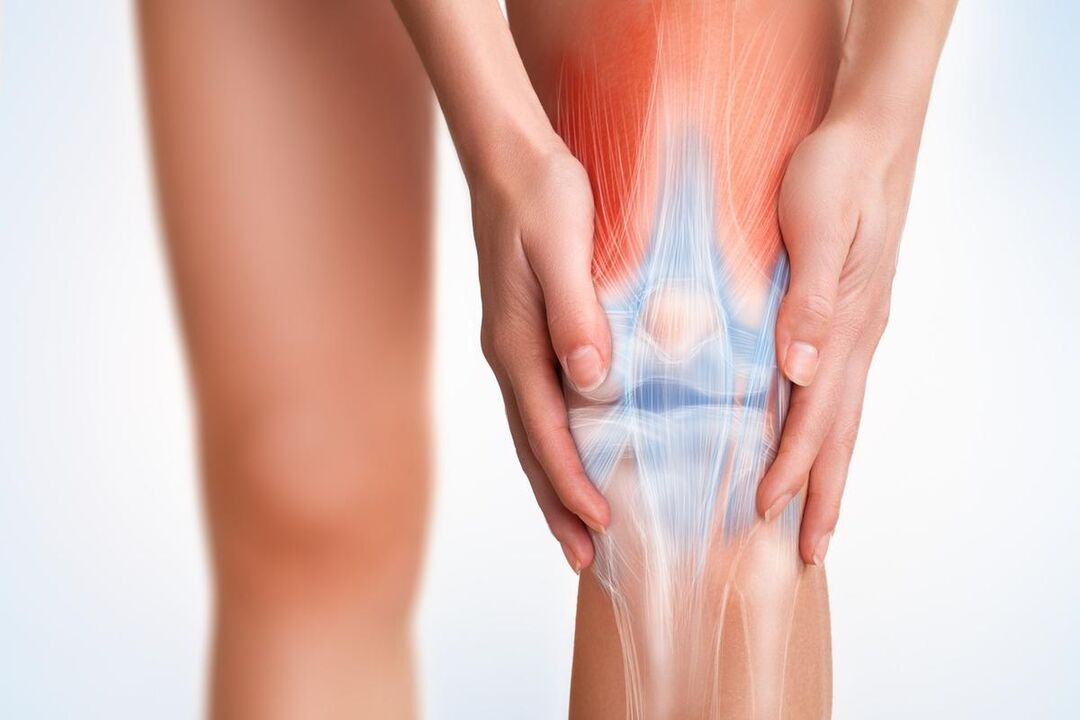
Joint pain (arthralgia) is an important symptom in the diagnosis of a number of diseases.He is the first to say that serious changes have begun at the junction of bones.
Usually, there is no swelling, curvature, severe pain on palpation, or redness during arthralgia.For a significant limitation of mobilitylarge fundsThe patient does not complain.It happens that even an X-ray examination does not reveal signs of inflammation.But this does not make arthralgia (joint pain) innocentSymptom:It can indicate serious organic injuries and even diseases that are not related to the condition of the joint itself.
As statistics show,paininhand jointsAnd every second person over the age of 40 suffers from feet.For people over 70 years of age,DiseasesThe support-driving system is even more common - in 90% of cases.
Causes of joint pain
one of the main onesreasonsThe problem is infectionAcuteinfection.it hurtsPain can occur both before the appearance of the first symptoms of the disease, and in its early stages.In case of infectionit hurts All joints of the body.Mobility is preserved in them.
post-infectioussharpJoint pain will be felt after:
- urogenital infections;
- Intestinal diseases.
Causes of the disease are also: secondary syphilis, tuberculosis, endocarditis.If there are foci of chronic infections in the human body - in the bile ducts, kidneys, pelvic organs, with parasitic infections - it can alsobreaking joints.
Arthralgia (joint pain) often confirms the presence of rheumatic diseases.In this case, the pain syndrome is associated with a change in weather conditions.More often, the patient feels strong discomfort in the large joints of the lower limbs.In the morning, he is bothered by the fact that he cannot immediately get up and walk quickly - because of pain and a feeling of stiffness in his joints.
If the pain is paroxysmal, it appears suddenly, intensifies during the day and lasts for several days, whilecomplainsOnly one joint, gouty arthritis can be suspected (uric acid crystals accumulate in the joint structures).
If the pain grows very slowly, affects large joints under stress (most often the knee or hip), is aggravated by physical activity and/or is accompanied by morning stiffness, the development of osteoarthritis (old name osteoarthritis), i.e. degenerative-dystrophic processes in the joint, can be assumed.
Common causes of joint pain:
- pathology of the thyroid gland;
- weather dependence;
- heavy metal poisoning;
- frequent physical injuries;
- long-term use of certain medications;
Classification of joint pain
There are several classifications of joint pain.According to the localization criterion, the following are distinguished:
- monoarthralgia (only one joint is affected);
- Oligoarthralgia (paindifferent at the same timefunds - but no more than five);
- Polyarthralgia (discomfort in more than 5 joints of the body).
Also, depending on the location of the joints, arthralgia can be general or localized.Depending on the nature of the damage, the pathology can be non-inflammatory or inflammatory.
Pain detected in diseases of the musculoskeletal system is conventionally divided into:
- start (appears at the beginning of the movement);
- mechanical (result of doing exercises, long walks, running);
- reflected (indicated in places where, in fact, there are no pathological changes);
- Nocturnal (disturbed during night rest).
Other joint pains may include:
- dull and sharp;
- permanent and transient;
- Weak, moderate and intense.
Post-inflammatory and pseudoarthralgia are divided into separate groups.
Diagnosis of joint pain
to understandWhy do my leg joints hurt?In his hand, the doctor orders the patient to undergo a series of diagnostic procedures.To begin with, laboratory tests are carried out:
- General blood test.It makes it possible to detect deviations taking into account the nature of joint damage and its degree of severity.The frequency of erythrocyte sedimentation, which confirms the presence of inflammation, with a normal number of leukocytes is a sign of rheumatic pathology.If leukocytes, on the contrary, are elevated, pain prevails in the spine and individual joints, the nature of the disease is most likely infectious.
- Biochemical blood test.With joint inflammation, they look at the level of C-reactive protein, fibrinogen, total protein, seromucoid, diphenylamine reaction, as well as some other indicators that confirm the rheumatic diagnosis.
In addition, the following examinations may be prescribed:
- Radiography.This is mandatory for painful joints, because without photographs the doctor cannot make a differential diagnosis and assess the degree of damage to the bone system.
- Computed tomography.It is used to study the location of inflammatory sites.
- Immunoelectrophoresis.An additional type of diagnosis that shows how far rheumatoid arthritis has spread.
- Arthroscopy.During the procedure, the specialist visually inspects the structure of the knee joint, its structure, and takes a tissue sample from the desired location.
- Radionuclide scanning.It is effective in the early stage of joint diseases.
- Arthrography.The doctor injects a special contrast medium into the joint (contrast cannot be used).Changing the initial image allows him to judge the presence of damaged parts in hard-to-reach parts of the joint.
If the doctor deems it necessary, a biopsy is performed.
Treatment of joint pain
treatmentArthralgia will be effective only if doctors find out the cause of the symptom and determine what disease it indicates.To relieve inflammation, the patient may be prescribed:
- property protectors.They slow the progression of osteoarthritis, block further destruction of articular cartilage, and reduce inflammation.Examples of such drugs of this group are combined drugs containing 2 components of cartilage, substances chondroitin and glucosamine in therapeutic doses, chondroitin sulfate 1200 mg, glucosamine 1500 mg, in capsule form.These components activate the regenerative processes in the cartilage, due to which the pain gradually disappears and the patient's condition improves.
- Nonsteroidal anti-inflammatory drugs.Eliminate pain and prevent the spread of inflammatory reactions.Normalizes body temperature.
- Muscle relaxants.Designed to reduce skeletal muscle stiffness.
- Antibacterial drugs.It is used in infectious arthritis.
- Complexes of vitamins and minerals.Vitamins A, E, C and B group are needed for the normal functioning of the joints and their quick recovery.Selenium, calcium, etc. are also important.
- Hormones, steroids.They are used if the joint is very inflamed and drug treatment was ineffective.
Along with taking pills, intramuscular and intravenous administration of drugs, the patient can be prescribed warming, pain-relieving and anti-inflammatory ointments.
If the pain is unbearable, a nerve block may be performed.During the procedure, strong drugs are used, which help to forget the symptoms of arthralgia for a long time.
Additional methods of treating joint pain include:
- physiotherapy;
- massage
- manual therapy;
- mechanotherapy;
- joint traction using special equipment;
- diet.
Physiotherapy procedures are indicated for the patient:
- shock wave therapy;
- ozone therapy;
- phonophoresis;
- Myostimulation and others.
surgical treatment
In difficult cases, it is impossible to eliminate discomfort in the area of one or several joints using non-invasive methods.Then the patient is recommended for surgery.It can be:
- Arthroscopic debridement.The surgeon makes tiny incisions and uses them to remove dead tissue from the joint cavity.The operation involves the use of modern endoscopic equipment.
- Puncture.Using a special needle, the doctor removes the accumulated fluid from the joint.
- Periarticular osteotomy.To reduce the load and improve the mobility of the affected joint, the doctor fixes the joint bones so that they grow together at a certain angle.
- Endoprosthesis.A very serious operation, which is used only if the joint cannot be restored.After that, the prosthesis is installed.
A doctor decides which method of joint pain treatment is indicated for a particular patient on an individual basis, taking into account age, medical history, symptoms and other factors.
Prevention
To prevent joint damage, you should pay maximum attention to proper nutrition.Your daily diet should contain all necessary vitamins and minerals.Junk food should be avoided.You should drink about 2 liters of clean drinking water per day - this has a positive effect on the functioning of the musculoskeletal system.
Also important:
- do not get cold;
- leading an active lifestyle;
- give up bad habits;
- sleep at least 8 hours a day;
- Take regular walks in the fresh air;
- Avoid staying in one position for too long.
If discomfort occurs in the joint, you should undergo an examination.If you suspect an inflammatory process, you should not self-medicate.